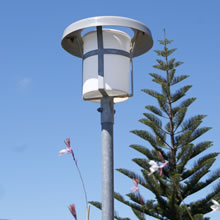
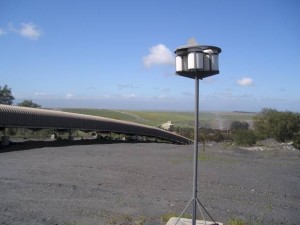
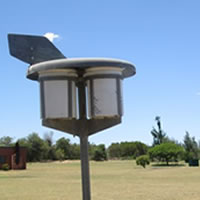
Dust Monitoring Equipment supplies, services and trains in fallout dust monitoring systems for mining, industrial and occupational hygiene clients across South Africa, Namibia, Zambia, Malawi and Botswana. Operating as DustWatch CC since June 2008, the company designs, supplies and supports its patented DustWatch fall-out dust monitoring equipment, including the Type S, Type USA and Buchner funnel laboratory systems aligned with the ASTM D1739 method. Head office sits in Sun Valley with branches in Piketberg and Cape Town. Services cover equipment supply, in-house laboratory dust analysis, RSPM and dust precipitation monitoring, occupational hygiene assessments, regulatory compliance audits under the Mine Health and Safety Act 1996 and the Occupational Health and Safety Act 1993, and accredited training. Their Occupational Hygiene training course runs in the first and third week of every month. The technical team is led by Gerry F. Kuhn (Chamber of Mines Certificate in Mine Environmental Control, IOHSA professional, 30+ years experience) and Chris Loans (Pr. Eng., chemical engineering and process specialist registered with ECSA).
Air quality monitoring is critical in South Africa, where mining, construction, and industrial activities are major contributors to dust pollution. Understanding the difference between PM2.5 and PM10 is essential for accurate dust monitoring and effective environmental management.
15 May 2026
Frequently Asked Questions
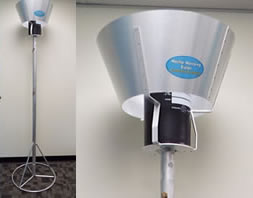
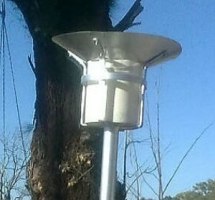
A fallout dust unit is a device used to collect and measure dust particles that settle out of the air, typically using a bucket or multiple-bucket arrangement in accordance with the standard method ASTM D1739. The amount of dust collected (expressed in mg/m2/day) is compared to action levels of 600 mg/m2/day residential and 1200 mg/m2/day industrial to assess whether fallout dust is a concern.
Import dust describes dust coming from a source other than the main source being monitored by DustWatch. Export dust is dust coming from the main source being monitored, regardless of where it is going.
Nett export dust is the term used when two DustWatch units are placed on opposite sides of a dust source. The import dust from one unit is subtracted from the export dust of the unit on the opposite side to provide a nett export figure.
Following international and South African trends, we recommend dropping the frequency to one sample every quarter, taken for one month in the middle of each of the four seasons. This maintains a sine curve trend so the company has an up-to-date history of its fallout data.
From our experience, units positioned too close to the source will get inundated with dust. As a guideline, a unit should not be positioned within 50 meters of a dusty road. Each position should consider both the dust source and potential problem areas such as towns, farms, and other mines.
The process of fallout monitoring can be contracted out at any stage. Required steps are purchasing and installing DustWatch units. Optional steps include bucket changing every two weeks, filtering contents onto filters, weighing filters, and drawing up monthly tables and reports. Any combination of these can be contracted to us.
Once buckets have been collected, contents are transferred to 2-litre bottles, crated, and sent to our offices using the company's preferred courier. We receive bottles from as far as Botswana. We then filter the water, weigh the samples, and write the reports.
The open area of the buckets is 0.0254m2 and the time period is usually 14 days. Dust collected in the water is filtered through 8-micron filter paper, which is then weighed. The mass is divided by the number of days and the area of the bucket to yield a result in mg/m2/day.
RSPM stands for Respirable Suspended Particle Matter.
We use cookies and analytics to improve your experience. By continuing to use this site you accept our
Privacy Policy.
Advertising cookies are used to serve relevant ads.
Ads keep ULC free
Looks like an ad blocker is running. Listing and browsing ULC is free, and ads cover our hosting.
If you’d like to support us, please allowlist ulc.co.za.